



ANSES at the 2026 Paris International Agricultural Show: using science to tackle risks
Themed presentations
Going further to prevent food poisoning and contamination in the animal production sectors.
From farm to fork, which hazards should be targeted as a priority and what are the most effective measures to explore besides the existing schemes? Our scientific teams provide insights on our recent expert appraisals.
Monday 23 February at 2 pm.
African swine fever: anticipating development of the threat in Europe and France.
At a time when this disease is present in several countries on the edge of Europe, we take a look at the surveillance systems in place and the measures being taken to prevent its introduction into France. Round table discussion moderated by Nicolas Rose, deputy director of ANSES's Ploufragan-Plouzané-Niort Laboratory, with Avril Gommard, agricultural advisor for Germany, Austria and Switzerland, François Viel, agricultural advisor for Poland, Mylène Petit, head of the National Swine Health Association (ANSP) and Olivier Bourry, from ANSES's National Reference Laboratory for African swine fever.
Tuesday 24 February at 2 pm.
Leveraging data to support sustainable food policies on a local level.
How can data help ensure that food is healthier, safer and more sustainable? Round table discussion moderated by Pierre Breton, Director of Green Data for Health (GD4H) at ANSES, with Agnès Pannier-Runacher, Member of Parliament for Pas-de-Calais and former Minister of the Environment, Pascal Coste, president of the Corrèze Departmental Council and vice-president for agriculture and food for the Assembly of French Départements, Thierry Cotillard, Chairman of Les Mousquetaires Group and Gilles Salvat, Director General of ANSES.
Tuesday 24 February from 3.30 pm.
Activities for the general public on the theme of food poisoning
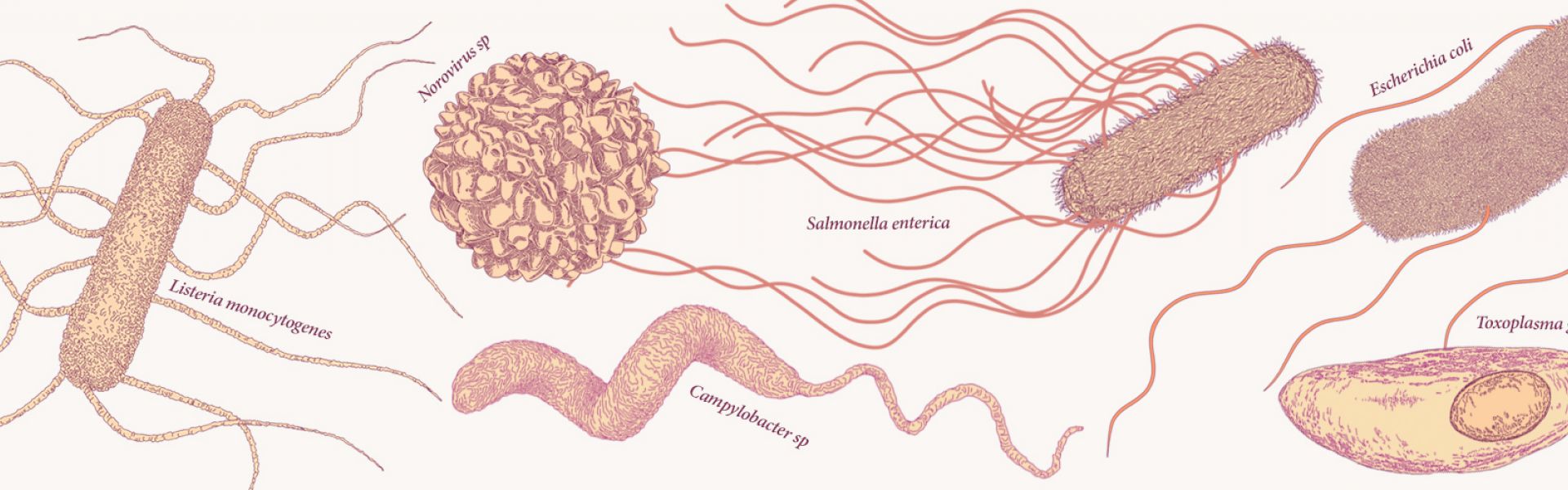
Quiz - Food pathogens: can you recognise them?
Salmonella, Listeria, viruses, parasites... Identify the agents responsible for the most common types of food poisoning, and find out which foods they may be hiding in.
Good practices in the kitchen
A practical scientific demonstration to understand why:
- You should always wash your hands before cooking
- Separate utensils and boards must be used for raw meat and vegetables
- Raw and cooked foods must be put on different plates
... and many other simple tips that make all the difference.