



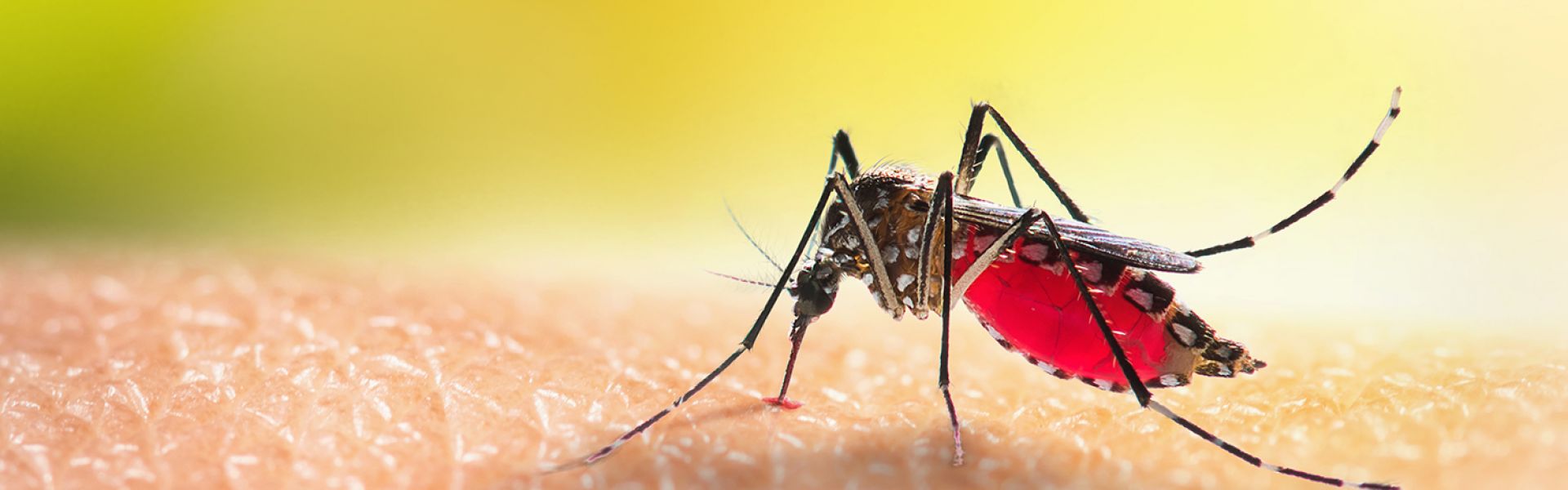
Dengue, chikungunya, Zika: how effective is releasing mosquitoes in preventing epidemics?
Mosquitoes of the genus Aedes, including the tiger mosquito Aedes albopictus, Aedes aegypti and Aedes polynesiensis, are vectors capable of transmitting pathogens to humans, including the dengue, chikungunya and Zika viruses. In France's overseas territories, arbovirus epidemics are recurrent and seasonal. The number of cases in mainland France has been increasing in recent years. However, to date, the fight against these mosquitoes has relied mainly on the use of insecticides, which pose significant constraints in terms of controlling risks to human health and the environment and lead to the development of resistance in mosquitoes to the substances they contain.
Several alternative approaches are being studied, including the release of mosquitoes. At the request of the Directorate-General for Health and the Directorate-General for Risk Prevention, ANSES conducted an assessment to evaluate the effectiveness of mosquito releases on Aedes mosquito populations and the viruses they are likely to transmit.
Several mosquito release techniques studied
Several types of mosquitoes can be released:
- Sterile insect technique (SIT): males rendered sterile by irradiation are released. When they mate with wild females, the latter lay non-viable eggs.
- Incompatible insect technique (IIT): males carrying a particular strain of the Wolbachia bacterium are released. This bacterium is naturally present in many insects and is transmitted from females to their offspring. If a female carrying a different strain, or not carrying the bacterium, mates with a male carrying the selected strain, the eggs will not develop.
- Replacement technique: male and female mosquitoes, carrying a strain of Wolbachia bacteria selected to reduce the mosquitoes' ability to transmit a targeted virus, are released.
To increase their effectiveness, the first two techniques can be combined or reinforced by impregnating the released mosquitoes with an insecticide that prevents the larvae from developing. In this case, it is not an alternative to biocides.
Evidence of effectiveness to be consolidated
ANSES's expert assessment focused on qualifying the level of evidence of the effectiveness of each technique: proven, possible, probable or unqualifiable. Effects on the number of eggs and/or adult mosquito populations have been observed: the sterile insect technique has a proven level of evidence for reducing the egg hatching rate in Aedes albopictus and a probable level of evidence in Aedes aegypti. The available data also show the ability of the incompatible insect technique to reduce the egg hatching rate and the number of females of the three Aedes species studied. However, there is insufficient data to determine whether these techniques can effectively reduce the incidence of vector-borne diseases.
On the other hand, the assessment highlighted a proven effect of the replacement technique in reducing the incidence of dengue fever, and a possible effect on reducing the incidence of chikungunya.
ANSES encourages the collection of additional data to complete the assessment of the effectiveness of the various techniques used for mosquito release.
Unintended effects to monitor
The Agency emphasises that these mosquito releases are likely to have unintended effects (the emergence of resistance in insects, disruption of food chains, changes in the dynamics of virus transmission to humans, etc.). To date, these effects have been little documented and require specific research to identify the measures to be put in place to control them. The Agency therefore proposes to conduct an assessment to identify indicators for monitoring these potential effects during future mosquito releases.
Necessary regulatory changes
Currently, mosquito releases are not governed by specific regulations. ANSES recommends creating a regulatory status for the use of irradiated or Wolbachia-carrying mosquitos in public health. The Agency also recommends making it mandatory to report release initiatives to a competent authority. When deploying releases, it also recommends implementing social acceptability assessments and communication strategies adapted to the local context.
Control methods must be combined within an integrated strategy
Mosquito releases alone cannot eliminate the nuisance caused by Aedes mosquitoes or the risks of vector transmission. These are preventive techniques which, in order to be effective, must be deployed over the long term and when mosquito densities are at their lowest. They must therefore be implemented as part of an integrated vector control strategy. Other prevention and control methods, particularly those aimed at reducing mosquito populations prior to release, remain essential, as does the implementation of an appropriate vaccination strategy where appropriate.
How to protect yourself from mosquitoes
Prevent mosquitoes from breeding by eliminating their breeding grounds:
- empty or remove saucers from under flower pots, vases or buckets regularly.
- store items in which water can accumulate (buckets, toys, watering cans, etc.) in a
- place where they are protected from the rain.
- cover rainwater collection containers with mosquito netting or cloth.
clean gutters to prevent water from stagnating.
- Protect yourself from bites:
- Wear long, loose-fitting, light-coloured clothing.
- Use skin repellents, following the instructions for use.
- Install screens on windows and mosquito nets around beds.
Report the presence of tiger mosquitoes on the website signalement-moustique.fr (in French).