



New ideas on avoiding food poisoning from raw-milk cheeses
An expert appraisal focused on the bacteria posing the greatest risks
Numerous measures are in place for preventing pathogenic bacteria from developing in raw-milk cheeses. Despite these, cases of food poisoning occur every year in France following the consumption of such cheeses. ANSES therefore conducted an expert appraisal to identify which measures should be strengthened or introduced to better protect consumer health. This expert appraisal follows on from Part 1 published in 2022, in which the Agency had identified the microbiological hazards and cheeses posing the greatest risk. It had also analysed the measures already taken by professionals to avoid microbiological risks.
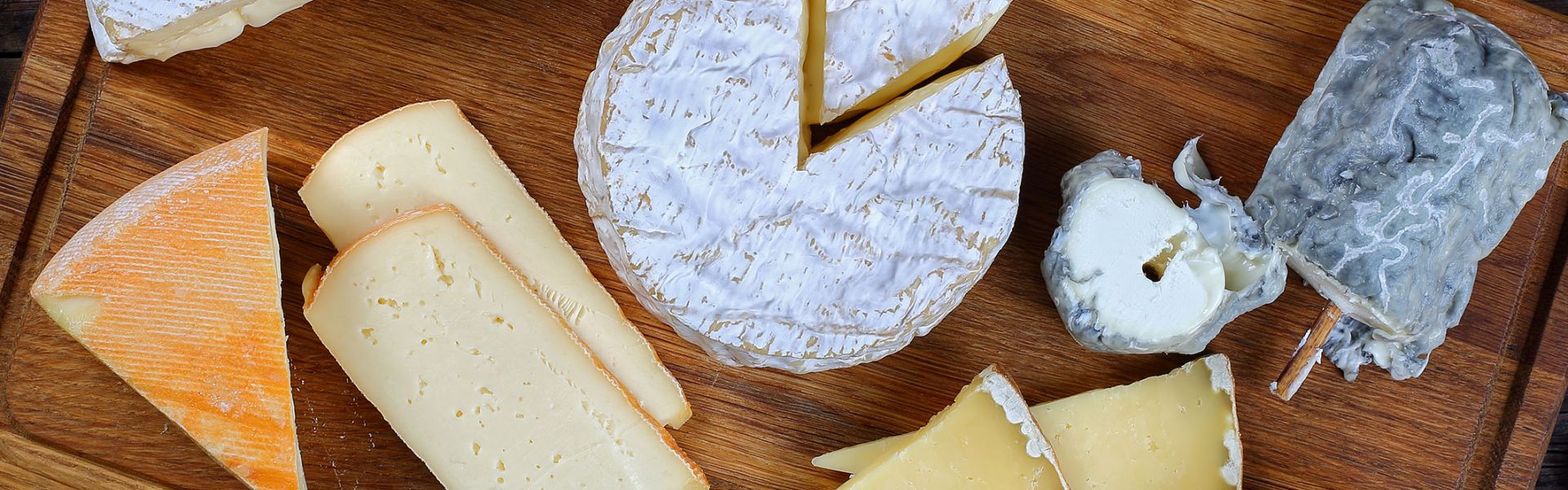
The second part of the expert appraisal focused on the three bacteria responsible for most food poisoning due to the consumption of raw-milk cheeses: Salmonella, Listeria monocytogenes and shigatoxin-producing Escherichia coli. The raw-milk cheeses posing the greatest risk are soft cheeses with a surface mould such as Camembert, Brie and Crottin de Chèvre; soft cheeses with a washed rind such as Munster and Livarot; and short-ripened uncooked pressed cheeses such as Morbier, Reblochon and Saint-Nectaire.
Modelling the fate of bacteria at all stages from cheese production through to consumption
In order to measure the effectiveness of all the possible measures, ANSES and its expert working group designed a model to simulate the development of pathogenic bacteria from farms through to consumers. This model was based on the results in the scientific literature and the data made available by the production sectors, and sought to gain an accurate picture of the actual conditions of milk production and cheese-making, and of consumer practices. Given its clear benefits for all stakeholders, ANSES decided to make this tool available to professionals and the scientific community, beyond its use in preparing this opinion.
As a result, the most effective measures for reducing the number of food poisoningcases were identified. The model can also be used to test the impact of different consumer practices, in particular storage temperature.
New measures recommended for farms and cheese-making
On farms, the most effective supplementary measure is to keep cattle herds free of the bacteria identified in the first part of the expert appraisal carried out in 2022 as posing a particular risk to humans. These include Salmonella Dublin and shigatoxin-producing Escherichia coli, more specifically those of serogroup O26 belonging to group I (STEC O26 group I).
Detection of carrier animals would enable them to be isolated and avoid their introduction into disease-free herds. This approach has already been implemented in several European countries for Salmonella Dublin. The feasibility, cost and effective implementation of the proposed new measures will need to be tested in the field before being applied more widely.
At the cheese-making stage, the scientists stressed the importance of rapid acidification of the milk, which slows down the multiplication of bacteria. "Acidification is a key step: if it is too slow or insufficient, it can give pathogenic bacteria time to multiply, particularly at the start of the production process," explains Laurent Guillier, joint coordinator of the expert appraisal. The expert appraisal recommended systematically checking this acidification and, where necessary, reinforcing it with the use of suitable lactic ferments, in order to achieve a sufficiently rapid and robust decrease in pH. The expert appraisal also showed that self-checks by professionals were effective in detecting contamination at an early stageand enabling corrective measures to be implemented promptly, thereby helping to reduce the risk of transmission to consumers.
ANSES recommends that once these measures have been tested in the field, the production sectors add them to the good hygiene practice guides intended for all professionals. All stakeholders need to be mobilised around practices identified as effective, in order to reduce the frequency of food poisoning outbreaks, or even eliminate them.
Good consumption practices should be maintained
Lastly, although risk management is primarily based on measures taken by professionals, several of the recommendations directly concern consumers. The most at-risk populations – young children, pregnant women, the over-65s and immunocompromised individuals – should avoid eating cheeses made from raw milk, with the exception of hard pressed cheeses such as Gruyère or Comté. Raw-milk cheeses do not pose a health risk if they are cooked, as in an oven recipe. It is also important to store cheeses at a temperature not exceeding 4°C.
Reducing the risk of food poisoning due to raw-milk cheeses is therefore based on the combined and careful application of measures throughout the production chain, supplemented by vigilant consumption practices.