

SUM'EAU: four years of monitoring COVID-19 in wastewater
Although the COVID-19 pandemic is officially over, the SARS-CoV-2 virus continues to circulate in the French population, as shown by the data collected by the network for microbiological surveillance of wastewater, SUM'EAU. This network was set up in September 2021 by the Directorate General for Health and the Directorate for Water and Biodiversity, to indirectly track the spread of SARS-CoV-2 in the population. It is run jointly by two health agencies with complementary skills: Santé publique France and ANSES.
Santé publique France currently manages the statistical processing of data from the 54 sewage treatment plants in the SUM'EAU network, as well as the production, interpretation and communication of epidemiological indicators. At ANSES, the Nancy Laboratory for Hydrology was appointed National Reference Laboratory (NRL) for the monitoring of SARS-CoV-2 in wastewater and sewage sludge in September 2021. The NRL develops and validates methods for detecting the virus in wastewater. It provides technical support to the Directorate General for Health and Santé publique France, as well as to the testing laboratories selected to detect this pathogen in wastewater from the plants in the SUM'EAU network.
In a scientific article published in January 2025 in the journal Microorganisms, the two partners presented the steps involved in setting up the network and the results obtained.
The network began with samples taken from 12 pilot sewage treatment plants in major conurbations across France, in order to test the analytical methods, the organisation of the system and the development of indicators.
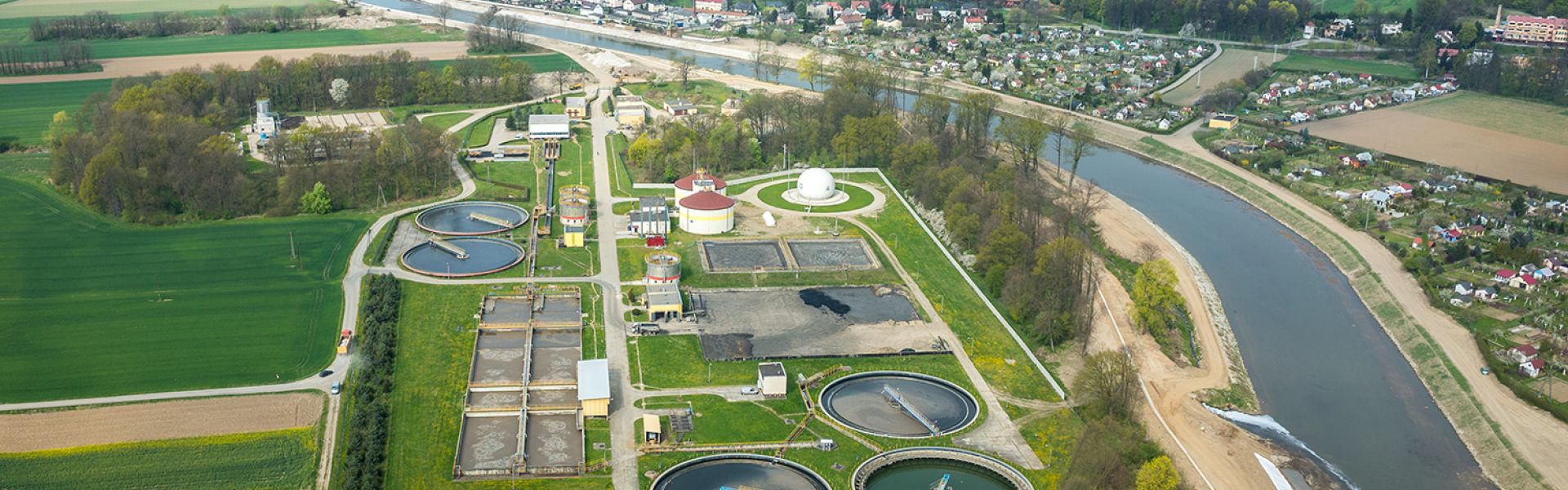
In February 2024, monitoring was extended to 54 sewage treatment plants across the country, to improve coverage of the monitored population. Every week, wastewater is collected from the inlets of the plants, sampled and then sent to the four testing laboratories in the SUM'EAU network for prompt analysis. Screening for SARS-CoV-2 virus particles is carried out using molecular methods to detect and quantify different target genes.
Predicting waves of virus circulation and preparing the healthcare services
Ever since the 2023-2024 winter season, data from wastewater collected via SUM'EAU have contributed to the integrated surveillance of acute respiratory infections, coordinated by Santé publique France at national and regional level, together with data from emergency department visits and general practice consultations, and from virological surveillance provided by medical testing laboratories in general practice and in hospitals.
Since the network began operating, seven peaks in virus circulation have been recorded in France. "An increase in SARS-CoV-2 detection in wastewater can come several days before an increase in emergency department visits for COVID," explains Christophe Cordevant, Scientific Adviser for Microbiology and Emerging Infectious Diseases at ANSES. "Detecting the virus in wastewater therefore enables us to anticipate epidemic waves and mobilise the necessary equipment and personnel. Above all, it provides a way of monitoring people carrying the virus who do not seek medical attention".
Santé publique France publishes indicators from the SUM'EAU network every week in the national acute respiratory infections bulletin and in regional epidemiological updates. The data are also stored on data.gouv.fr.
Working towards European harmonisation
ANSES's Nancy Laboratory for Hydrology continues to monitor the 12 pilot reference plants in order to ascertain the quality of the results provided by the laboratories. It also organises annual inter-laboratory tests to assess the performance of the laboratories involved in this monitoring. In November 2024, a Europe-wide inter-laboratory test involving a large number of European players verified the abilities of various national reference laboratories to detect SARS-CoV-2 in wastewater.
ANSES and Santé publique France are also members of the consortium involved in the EU-Wish (EU Wastewater Integrated Surveillance for Public Health) Joint Action, which was launched in November 2023. It aims to improve wastewater monitoring capabilities, harmonise detection practices and define new shared targets for analysis. More broadly, the lessons learned from this project will make it easier to transpose into French law the European Urban Waste Water Directive (whose 2024 revision introduced the principle of monitoring pandemic emergence), and prepare for the integration of Europe-wide indicators by the European Centre for Disease Prevention and Control (ECDC).
Building on the success of the SUM'EAU network, there are now plans to extend surveillance to additional pathogens, such as other viruses causing respiratory viral infections responsible for seasonal epidemics (influenza, bronchiolitis).
Detection of the measles virus: an innovative method developed for the SUM'EAU network
With cases of measles quadrupling in France between 2023 and 2024, ANSES, Santé publique France and the National Reference Centre for measles (Caen University Hospital) have developed a method for detecting this virus in wastewater.
Tested by the National Reference Laboratory on samples taken by the SUM'EAU network, this method is based on digital PCR. It can detect the virus in wastewater even at low concentrations, and can distinguish wild viruses from attenuated ones (which may be excreted in urine following vaccination).
This method could be used to support surveillance of clinical cases (measles is a notifiable disease), in order to improve detection of low-level circulation in an area at risk or monitor trends during an epidemic wave. However, permanent use is not planned, given the current low prevalence of measles in France.
Read the publication Tracking Wild-Type Measles Virus in Wastewater Using Multiplex RT-dPCR, A Novel Tool for Measles Surveillance