





Laboratory for Animal Health (Maisons-Alfort and Dozulé sites)
Director: Stéphan Zientara
Deputy Director: Sara Moutailler
Deputy Director for General Affairs: Catherine Lambert
Assistant Director: Labib Bakkali-Kassimi
Addresses:
Maisons-Alfort site: 14 rue Pierre et Marie Curie 94701 Maisons-Alfort Cedex
Normandy site: RD 675 – 14430 Goustranville
Email: contact.lsan@anses.fr
Team: 180 staff in six units and four contracted units



The laboratory's missions
The laboratory conducts significant research, reference, expert appraisal and epidemiological surveillance activities. The research component of the laboratory's work is carried out in collaboration with other organisations and has been approved by the Ministry of Research for the joint research units (UMRs) and contracted units (USCs). A joint technology unit (UMT) has also been set up between ANSES and the French Horse and Riding Institute (IFCE). The laboratory belongs to the communities of universities and establishments of eastern Paris (COMUE) and of Normandy. It hosts and provides training for interns and students, both French and foreign of any nationality. It has been a member of the Paris Saclay Animal Sciences (SAPS) network since 2015.
The Laboratory for Animal Health focuses its research work on four main themes:
- management of major animal epidemics such as foot-and-mouth disease, bluetongue, etc.;
- bacterial, viral and parasitic zoonoses (animal diseases whose pathogens are transmissible to humans) such as bovine tuberculosis, toxoplasmosis, etc.;
- emerging multi-species infectious animal diseases, particularly vector-borne diseases and opportunistic fungal infections;
- persistent and/or emerging infections of major importance in the equine sector.
The laboratory draws on its full range of skills to provide decision support to health authorities: it develops faster and more reliable tools for detecting and characterising pathogens in domestic and wild animals, as well as new typing methods. It also analyses host-pathogen relations in order to establish new animal disease prevention strategies, including vaccines.
The laboratory provides analytical services to health authorities and animal health professionals concerning samples of animal origin, for the animal diseases for which it holds national and international reference mandates. It holds 36 reference mandates, and performs more than 30,000 diagnostic tests each year.
It monitors the emergence of the animal epidemics within its remit in order to prevent their spread, analyse their causes and assess the related risks. In this regard, it is tasked with issuing alerts for "foot-and-mouth disease and similar vesicular diseases" and coordinates the Resumeq equine mortality surveillance network.
Sustainable development
The Laboratory for Animal Health is actively involved in the implementation of various sustainable development initiatives. Carried out in conjunction with ANSES's sustainable development unit, these include reductions in the consumption of disposable materials (plastic), in the carbon/greenhouse gas footprint, in air travel where possible, and in emails, as well as a collective approach to energy saving.
To know more about the Laboratory
>> See the leaflet (PDF)
Latest laboratory news
A “One Health” collaborative model in response to West Nile virus
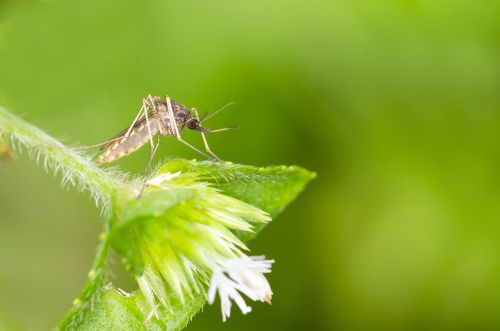
When West Nile virus emerged in Nouvelle-Aquitaine in 2022-2023, scientists from ANSES, Bordeaux University Hospital, the Gironde Departmental Directorate for the Protection of Populations and Inserm joined forces to assess the level of risk in the region. In an article published in May 2025 in the journal Open Forum Infectious Diseases, they describe how the rapid mobilisation of local stakeholders in the areas of human health, animal health and the environment enabled preventive measures to be quickly put into place.
The laboratory's units
The Laboratory for Animal Health comprises ten units:
ANSES units
- Bacterial Zoonoses (UZB)
- Pathophysiology and Epidemiology of Equine Diseases (PhEED, Normandy site)
- Epidemiology (EPI)
Joint research units (UMRs)
Contracted units (USCs)
- Epidemiology of infectious animal diseases (EPIMAI): ENVA
Epidemiology of toxoplasmosis (EPITOXO): University of Reims Champagne-Ardenne
Joint Technology Unit
Partnerships
- French Agricultural Research Centre for International Development (CIRAD)
- Army Health Services Research Centre
- Centre for Research and Surveillance on Emerging Diseases in the Indian Ocean (CRVOI)
- French Space Agency (CNES)
- Île-de-France Regional Council
- Normandy Regional Council
- DIM1Health for the Île-de-France region (which it coordinates)
- ABIES Doctoral School
- National veterinary schools (Alfort, Nantes, Toulouse, etc.)
- National federations of animal health protection groups
- Centaure scientific interest group (GIS) for equine health (of which it is a member)
- Begin Joint Forces Hospital
- French Horse and Riding Institute (IFCE)
- National Research Institute for Agriculture, Food and the Environment (INRAE)
- Institut Pasteur
- Central Laboratory of the Police Prefecture
- Ministry of Agriculture and Food (Directorate General for Food)
- French Biodiversity Agency (OFB)
- Santé Publique France
- University of Caen-Normandy
- University of Paris-Est Créteil
- Sorbonne University
- University of Paris-Saclay
The laboratory collaborates with a large number of European research institutes, with all EU countries represented. It also works with the other European national reference laboratories on all the animal diseases that it covers.
The main European and international partners include:
- Center for Research and Advanced Studies of the National Polytechnic Institute (CINVESTAV), Mexico
- Agrifood Research and Technology Centre of Aragon (CITA), Spain
- Centre for Veterinary and Agrochemical Study and Research (Sciensano), Belgium
- European Commission for the Control of Foot-and-Mouth disease (EuFMD), an FAO research group, Rome
- Friedrich-Loeffler-Institut (FLI), Germany
- National Agricultural Technology Institute (INTA), Argentina
- Institute of Tropical Medicine in Antwerp, Belgium
- Scientific Veterinary Institute, Serbia
- Italian health authority and research organisation for animal health and food safety (IZSVe), Venice, Italy
- World Organisation for Animal Health (WOAH)
- Lanzhou Agricultural University, China
- Jilin University, China
- Guangxi University, China
- Northern Arizona University, Flagstaff, USA
- Azabu University, Japan
- University of California Davis, USA
- University of Kentucky, USA
- University of Ghent, Belgium
- University of Zagreb, Croatia
The laboratory's services
Delivery address for samples to be tested:
Normandy site (PhEED Unit)
Hours: 8.30am to 12 noon and 1.30pm to 5pm
RD675, La Fromagerie, 14430 Goustranville
Maisons-Alfort site
Hours: 8am to 4pm
14, Rue Pierre et Marie Curie, 94701 Maisons-Alfort cedex
Please note that the laboratory does not accept any deliveries on Saturday and Sunday.
The analysis request documents must be attached to the outside of the shipment, and must specify the type of analysis requested.
The services offered by the Laboratory for Animal Health and their implementation conditions are listed in the Laboratory for Animal Health's service catalogue (Excel). The service rates (PDF) are available online.
The different units of the Laboratory for Animal Health (LSAN), equipped with analysis management software, can send you analysis reports electronically instead of by post, in order to reduce delivery times and facilitate transmission. To benefit from this service, please sign this form and return it to us: Convention de preuve (in French).
For the Foodborne Parasites NRL, you can download the analysis request form here: Commémoratif / suivi des prélèvements (Word) (in French)
Analysis request documents must be attached to the exterior of the package, and must specify the type of analysis requested.
The laboratory is accredited by Cofrac according to standard NF EN ISO/CEI 17025 under reference number 1-7341 for tests defined within the scope of accreditation (available on the Cofrac website). The use of the laboratory's accreditation mark by customers and stakeholders is only authorised for documents issued by the laboratory in their entirety (e.g. analysis reports).
Complaints
Any expression of dissatisfaction (complaint) must be made in writing (by email or post) to the person responsible for the activity concerned (e.g. the person who signed off on the analyses, the ILPT coordinator, etc.) or to the quality department (cecile.cecconi@anses.fr). The complaint handling process is available on request from the quality department.